
Public pools serve large numbers of people from every age group, which makes water quality monitoring a matter of public health. Municipal pools, sports centers, schools, and community facilities must keep water safe throughout long operating days, often with hundreds of swimmers passing through. Poor monitoring can lead to infections, skin and eye irritation, closures, and damage to a facility's reputation. A structured monitoring program, supported by reliable instruments and trained staff, allows operators to detect problems early, respond quickly, and demonstrate that their pool meets health regulations at all times.
Why Monitoring Is Essential for Public Facilities
Unlike private pools, public facilities face constantly changing conditions. Bather loads rise and fall throughout the day, introducing sweat, oils, and contaminants that consume sanitizer rapidly. Weather, temperature, and sunlight affect outdoor pools further. Without frequent measurement, chemical levels can slip out of safe ranges in a matter of hours. Health authorities typically set strict standards for disinfection, pH, and clarity, and facilities are expected to keep records proving compliance. Monitoring therefore serves two purposes at once, protecting swimmers directly and providing evidence that the pool is being managed responsibly.
Key Parameters Every Operator Should Track
Several measurements form the backbone of any public pool monitoring program. Free and combined chlorine levels show how much active sanitizer is available and how many chloramines have formed. pH determines how effectively chlorine works and how comfortable the water feels. ORP, or oxidation reduction potential, indicates the water's overall sanitizing power. Total alkalinity, calcium hardness, and cyanuric acid influence stability and equipment protection. Water temperature and turbidity complete the picture. Tracking these together gives operators a full understanding of conditions rather than relying on one number in isolation.
Using Manual Testing as a Foundation
Manual testing remains an important part of monitoring even in highly automated facilities. Photometers, test kits, and reagent-based methods allow staff to verify readings at different points around the pool and cross-check automated sensors. Regular manual tests help catch sensor drift or calibration errors before they cause problems. Operators should follow a fixed schedule, testing at opening, during peak hours, and at closing, with extra checks after heavy use or unusual events. Training staff to perform tests correctly and interpret results accurately ensures the data collected is reliable and genuinely useful.
Adopting Automated Online Monitoring Systems
Choosing equipment from a dependable swimming pool equipment manufacturer such as Ziying allows public pools to move from periodic checks to continuous oversight. Online monitoring systems use probes to measure chlorine, pH, ORP, and temperature around the clock, linking directly to dosing pumps that adjust chemistry automatically. When readings move outside set limits, alarms alert staff immediately. This real-time response is especially valuable during busy sessions when conditions change quickly. Automation reduces manual workload, improves consistency, and gives operators far greater confidence in water safety.
Recording Data and Meeting Compliance Requirements
Accurate records are as important as the measurements themselves. Logging every test result, chemical adjustment, and maintenance action creates a clear history that inspectors can review. Digital monitoring systems simplify this by storing data automatically and producing reports on demand. Over time, these records reveal patterns, such as how certain events or weather conditions affect chemistry, allowing operators to anticipate problems. Well-maintained logs also protect facilities in the event of complaints, demonstrating that water was managed properly and that any issues were addressed promptly and professionally.
Responding Quickly to Water Quality Problems
Monitoring only adds value when it leads to timely action. Operators should have clear procedures for responding to low chlorine, high combined chlorine, unbalanced pH, or reduced clarity. Responses may include adjusting dosing, increasing circulation, backwashing filters, or temporarily limiting bather numbers. In serious cases, such as fecal contamination incidents, the pool may need to be closed and treated following established protocols. Training staff on these procedures ensures they act confidently and consistently, minimizing risk to swimmers and reducing the time the pool needs to remain out of service.
Building a Reliable Monitoring Program
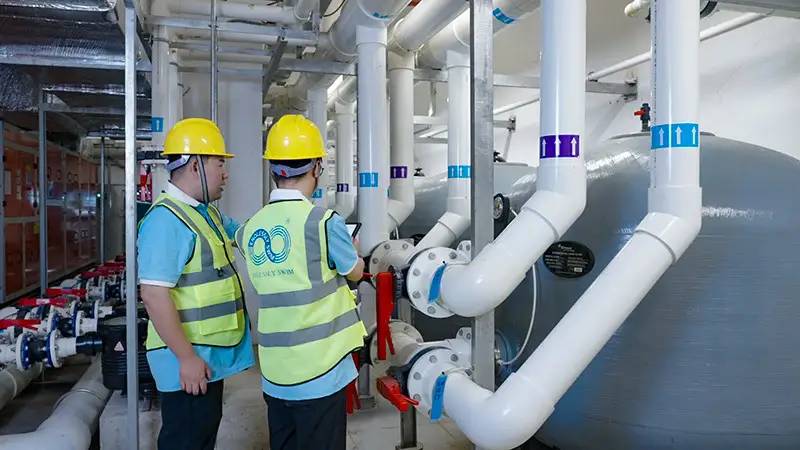
The most effective public pools combine accurate instruments, automated control, regular manual checks, thorough record-keeping, and well-trained staff. Supporting this with properly sized filtration, circulation, and disinfection equipment makes stable water quality far easier to maintain. Ziying supplies integrated treatment and monitoring solutions for public and institutional pools, helping operators protect swimmers while controlling chemical and energy costs. By treating monitoring as an ongoing system rather than an occasional task, public facilities can provide safe, clean, and welcoming water for every visitor who walks through their doors.