
Transitioning your toddler from a confined nursery cot to an open, independent sleeping space is an exciting developmental milestone that fosters confidence and self-regulation. However, when you remove the physical bars of a traditional crib and introduce a toddler floor bed, the safety boundaries of the sleep space immediately expand to include the entire bedroom. At Roomix, founded in 2022 by Shona Chalmers and Mark Apter, safety is the ultimate foundation of our design philosophy. For children in the 18-month to 3-year age bracket, a low-profile bed offers incredible freedom of movement, but it requires a meticulously childproofed room to function safely. This comprehensive safety checklist is designed to help parents confidently prepare a secure environment, ensuring that independent exploration always goes hand-in-hand with absolute peace of mind.
Anchoring Heavy Furniture and Eliminating Tip Hazards
The very first and most critical step in preparing a bedroom for a floor bed is securing every single piece of furniture to the wall. Because an 18-month-old can independently slide out of a single bed on floor setup at any time, the entire room must be treated with the same safety rigor as a crib. Heavy items like wardrobes, chests of drawers, and bookshelves can easily tip over if a curious toddler decides to open the drawers and use them as a ladder. Parents must use heavy-duty furniture straps or L-brackets to anchor these items firmly into wall studs. Additionally, avoid placing heavy items, like televisions, toys, or large decor pieces, on top of tall furniture where they could be pulled down by a child reaching upward.
Eliminating Suffocation Risks and Choosing the Right Mattress Fit
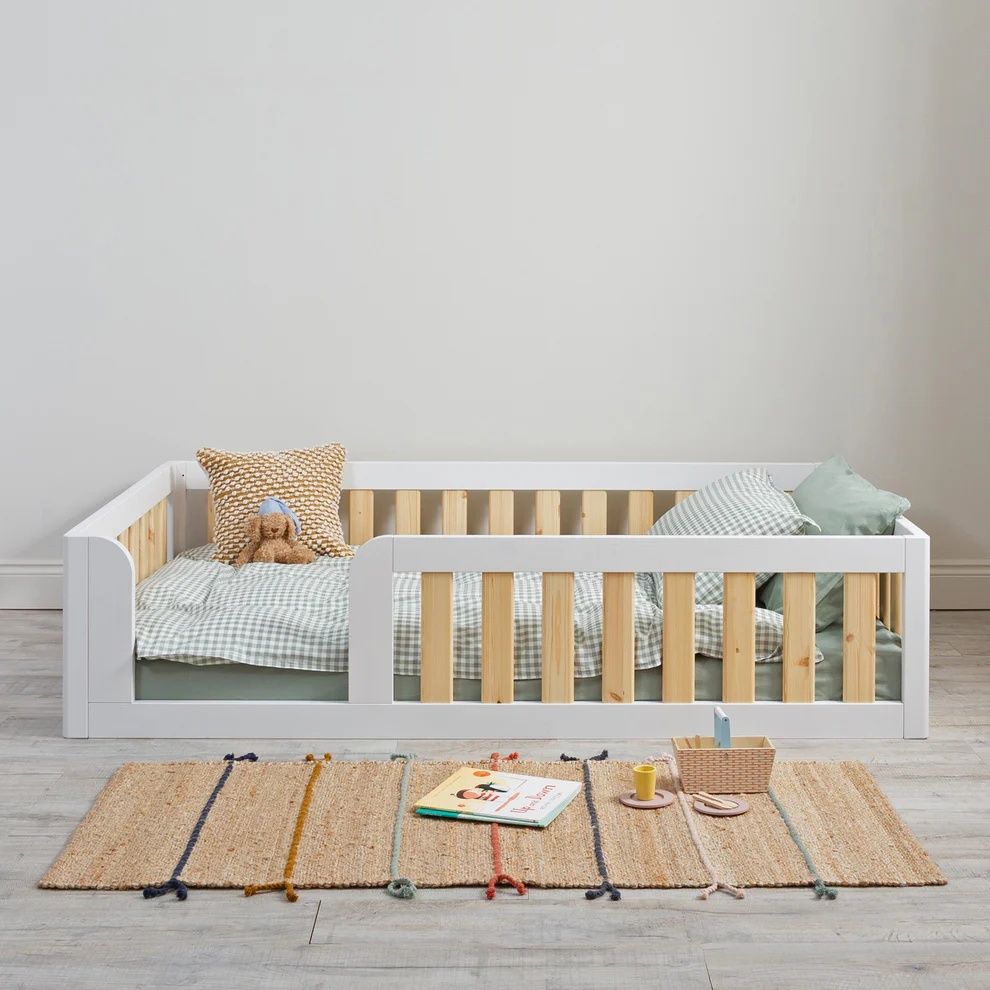
When setting up a bed Montessori style, mattress selection and placement require careful attention to prevent entrapment or suffocation hazards. The mattress must fit perfectly snug within the wooden frame provided by the artisan workshops to ensure there are no large gaps where a toddler's limb or head could become wedged. If you choose to place a single bed on floor without a frame, the mattress must be kept away from the walls. A gap of at least 12 inches should be maintained between the mattress edge and any wall to prevent a sleeping toddler from rolling into a tight crevice and becoming trapped against the wall surface. Furthermore, the mattress should be firm, and the bedding should be kept simple and free of excessive plush pillows or heavy, oversized blankets.
Complete Electrical Childproofing and Cord Management
With the freedom to wander around the room unsupervised during early morning hours, a toddler has easy access to everything at ground level, making electrical safety paramount. All electrical outlets in the bedroom must be securely sealed with heavy-duty outlet covers or box guards that a child cannot easily remove. Power strips should be hidden entirely behind anchored furniture or placed inside locked cable management boxes. It is equally important to audit the room for dangling cords from blinds, curtains, baby monitors, or lamps. All cords must be wound up tightly and mounted high out of reach, as loose wires present a significant strangulation hazard to an active 2-year-old exploring their room in the dark.
Securing Windows and Restricting Exterior Door Access
A room with a low toddler floor bed requires robust perimeter security to ensure the child remains safely inside their designated personal sanctuary. Windows must be fitted with reliable window guards or restrictors that prevent them from opening more than a few inches, ensuring a toddler cannot climb onto a low windowsill and tumble outside. Additionally, parents should consider the bedroom door itself; while the Montessori method encourages freedom within the room, it is often wise to install a safety gate at the bedroom doorway or use a high childproof handle lock. This keeps the toddler safely contained within their fully childproofed bedroom during the night, preventing unsupervised wandering into a dark kitchen, bathroom, or staircase.
Removing Choking Hazards and Auditing Low-Level Storage
The Montessori philosophy heavily relies on low, open shelving to encourage children to choose their own books and toys independently. However, when selecting items for these accessible shelves within the 18mths–3yrs collection, parents must conduct a strict choking hazard audit. Every toy, puzzle piece, or decorative item kept on a low shelf or inside a floor bin must be completely age-appropriate and free of small parts that could be swallowed. Check toys regularly for broken plastic, loose stitching, or exposed button batteries, which are incredibly dangerous. Keep the selection minimal, organizing toys in simple, open baskets that allow the toddler to interact safely with their environment without becoming overwhelmed or coming into contact with hidden hazards.
Designing a Soft Landing Zone Around the Frame
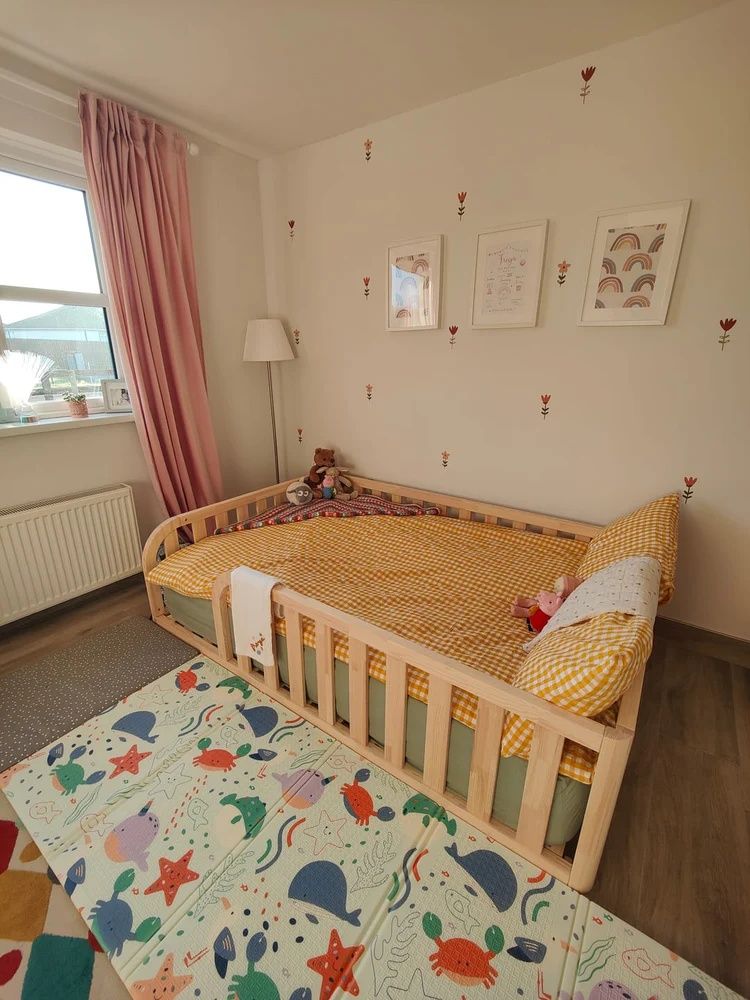
Even though a floor bed sits mere inches from the ground, eliminating the risk of a dangerous fall, toddlers are notoriously active sleepers who roll around frequently during the night. To maximize comfort and safety, parents should create a soft landing zone completely surrounding the exposed sides of the bed frame. Placing a plush, low-pile rug or soft foam play mats directly adjacent to the mattress ensures that if a child does roll out of bed, their landing is soft, quiet, and comfortable. Many toddlers who roll onto a soft rug will simply continue sleeping soundly right on the floor without waking up or experiencing any distress, turning what would be a scary crib tumble into a harmless, minor adjustment.
Managing Textiles and Safe Installation of Bed Drapes
Adding beautiful customisable bed drapes is a wonderful way to create a cozy, secure sleep nook, but they must be installed with strict adherence to safety guidelines. Any fabric canopy or drape used around a toddler floor bed must be securely attached to the frame so that it cannot be easily pulled down by a tugging child. The fabric must be lightweight and highly breathable, ensuring optimal airflow through the sleep space. Parents should regularly check that the fabric length does not pool excessively on the mattress or floor, which could create a tripping or entanglement hazard for a groggy toddler waking up in the middle of the night. Keep ties and ribbons short and trimmed to eliminate any loop hazards.
Thinking Ahead to Future Upgrades and Bunk Bed Loft Configurations
As your child grows out of the toddler phase and enters the 4+ age bracket, their sleep environment will naturally evolve to accommodate their growing height and changing spatial needs. While a low floor bed is the gold standard for safety during the 18–36 month window, parents often look toward more advanced, vertical layouts as their children mature. Exploring future options like a bunk bed loft can be a brilliant way to maximize floor space in small rooms once a child is developmentally ready for an elevated platform. Sourcing your initial furniture from versatile, artisan-focused brands like Roomix ensures that your components can be adapted, bundled, or upgraded safely over time, keeping pace with your family's growth while maintaining an uncompromised commitment to structural safety.
Choosing Non-Toxic Materials and Premium Artisan Craftsmanship
The hidden safety hazards in children's furniture often come from the chemical composition of the materials used in mass production. Many mass-produced flat-pack beds are manufactured using cheap particleboard and volatile organic binders that can emit harmful chemical odors into a small bedroom. Because Roomix collaborates exclusively with dedicated artisan workshops, every bed frame in our collection is built from solid, sustainable timber. The wood is meticulously hand-sanded to completely eliminate the risk of splinters and finished with non-toxic, child-safe coatings. This dedication to premium craftsmanship ensures that your child is not only safe from physical falls and trips but is also breathing clean, healthy air throughout their most formative developmental years.