
Let me be honest with you right from the start. When people hear “two-day Rinjani trek,” they often assume they will be standing on the absolute highest summit, watching sunrise from 3,726 meters. That is usually not the case. A genuine two-day itinerary is tight, intense, and designed for the fit traveler who has very limited time on Lombok. You will not reach the very top of the volcano, but what you will get is something arguably just as stunning: the crater rim viewpoint overlooking the emerald Segara Anak Lake and the newborn cone of Gunung Baru. This shorter trek is perfect for those who want a taste of Rinjani’s raw beauty without committing to three or four days of hardcore mountaineering. It is short, yes, but unforgettable in every sense of the word.
Who This Trek Is Actually For
Before you book anything, let me save you some disappointment. The two-day Rinjani Trekking 2 Days is not a casual walk in the park. It is compressed suffering mixed with moments of pure magic. This trek suits hikers who already have a reasonable fitness baseline and do not mind pushing through fatigue. It is also ideal for travelers on a tight schedule who cannot spare three full days. Families with young children should look elsewhere, and so should anyone with knee problems, because the descent on day two is steep and relentless. However, if you are someone who loves a challenge and prefers quality over quantity, those two days will give you a lifetime memory. You will climb from around 600 meters to over 2,600 meters at the crater rim, which is a serious elevation gain in less than 24 hours.
The Typical Two-Day Itinerary Explained
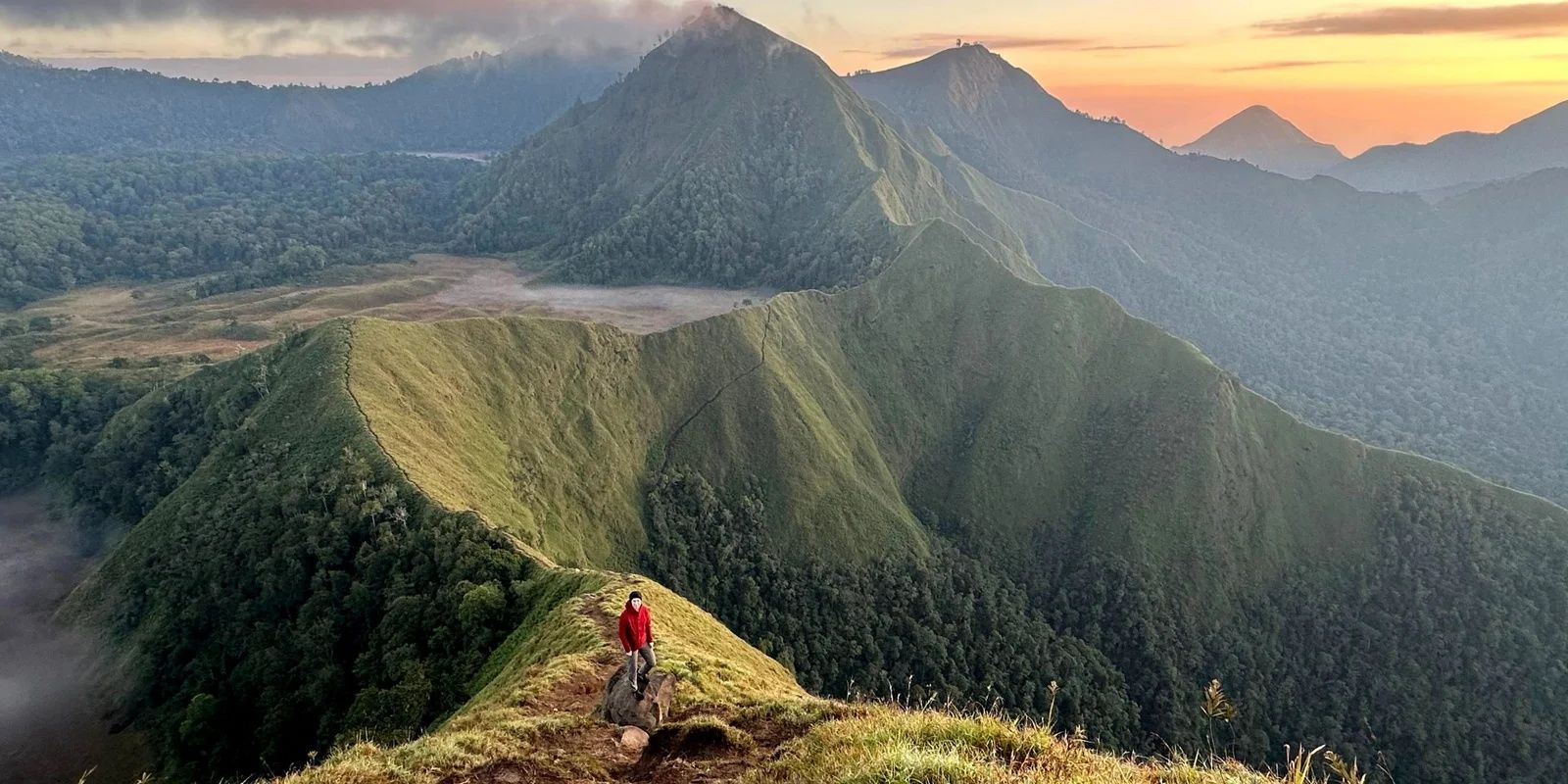
Most two-day treks follow the Sembalun route, and for good reason. Day one usually starts very early, around 6 AM, after a short drive from your hotel to the Sembalun village registration post. You will hike through open savanna grasslands for about three hours to Pos 2, then continue through light forest to Pos 3. The real challenge begins after lunch, when the trail turns upward toward the crater rim, known locally as Plawangan Sembalun. Expect to arrive at the rim campsite around 4 PM, just in time to watch the sunset paint the lake and the tiny volcanic cone in shades of orange and purple. That night, you sleep in tents at 2,639 meters. Day two starts with sunrise views, a hot breakfast, and then the long descent back down to Sembalun, usually finishing around midday. There is no summit attempt on this itinerary, and honestly, that is fine because the rim view is spectacular on its own.
What You Will See Without Summiting
Many trekkers feel a pang of disappointment when they learn they will not reach the highest point. Let me reassure you. The view from the Sembalun crater rim is arguably more photogenic than the actual summit. From this perch, you look down into the vast caldera, a giant volcanic crater within a crater. The crescent-shaped Segara Anak Lake shimmers in shades of blue and green, and in the middle of the lake sits Gunung Baru, a small black volcanic cone that erupted dramatically in 2009. Steam often rises from its sides, reminding you that Rinjani is very much alive. On a clear morning, you can watch the sunrise slowly illuminate the lake while the shadow of the main summit peak stretches across the water behind you. It is the kind of scene that makes you forget the burning in your thighs. Plus, you avoid the infamous summit scree slope, which many trekkers describe as the most frustrating two hours of their lives.
How to Prepare Your Body and Mind
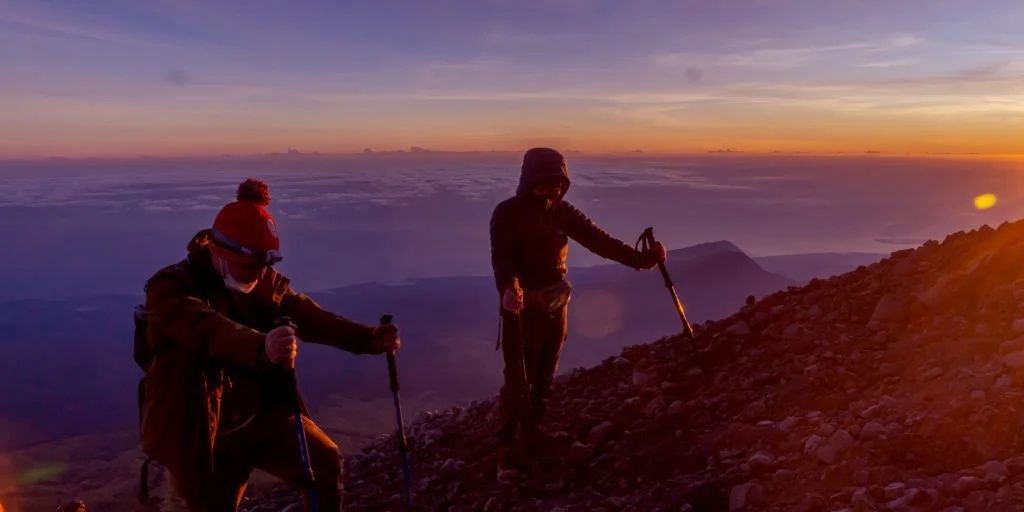
Because you are compressing what normally takes three days into two, you need to arrive prepared. Start doing stair climbs or hill repeats at least six weeks before your trip. Carry a backpack weighing around five to seven kilograms during training to simulate your daypack. On the trek itself, embrace a simple rhythm: walk slowly, drink often, and rest briefly at every pos. Many people fail on this two-day trek not because they are weak, but because they start too fast on the gentle savanna section, only to crash hard on the steep final climb to the rim. Also, pack light but smart. Your porter will carry the tent and cooking gear, but your personal backpack needs a warm jacket for the cold night at 2,600 meters, a headlamp, sunscreen, lip balm, wet wipes, and at least two liters of water capacity. Do not forget earplugs, because the wind at the rim can howl like a train.
Local Tips for a Smoother Experience
Here is the kind of advice that official brochures never mention. First, request a late afternoon meal before the descent on day two. Many people finish the trek starving because they ate breakfast early and then hiked for five hours. A simple noodle dish at the rim before you start walking down makes a huge difference. Second, rent trekking poles in Sembalun village, even if you never use poles elsewhere. The descent is loose volcanic grit, and poles save your knees from days of soreness. Third, do not book a flight immediately after your trek. You will be tired, dusty, and likely a bit sore. Give yourself at least one night in a proper hotel with a hot shower before traveling onward. Finally, choose your trekking company carefully. A cheap operator might skip important safety gear like emergency radios or proper first aid kits, and on a compressed two-day schedule, you have very little margin for error. A good guide, warm meals, and a clean sleeping bag are worth every extra rupiah. With these tips in hand, your two-day adventure to Rinjani’s crater rim will be short in duration but endlessly long in beautiful memories.