
Walk into any dance studio and you will see two kinds of shoes sharing the same floor. Some dancers wear footwear that was shaped by hands, one pair at a time, while others wear shoes that rolled off an assembly line by the thousands. On the surface, the difference can seem minor—both are made of leather, both have soles and heels, both serve the same basic purpose. But once a dancer spends real hours in each, the gap becomes obvious. Suphini has built its entire identity on the handmade side of that divide, and understanding what actually separates the two approaches explains why so many dancers refuse to go back once they have experienced the difference.
Two Very Different Ways of Making a Shoe
The contrast begins long before anyone laces up. Mass-produced handmade dance shoes are designed around averages: a standard last, a standard width, a standard sole thickness, all calibrated so that machines can replicate them endlessly at speed. Efficiency is the guiding principle, and every decision flows from it. Handmade construction, as practiced by Suphini, reverses that logic. The guiding principle is the dancer's foot, and the maker's job is to serve it. Machines still play a supporting role in the workshop, but the decisive steps—cutting, shaping, stitching, finishing—depend on human hands and human judgment. This difference in starting philosophy ripples through every stage that follows, from material choice to final inspection.
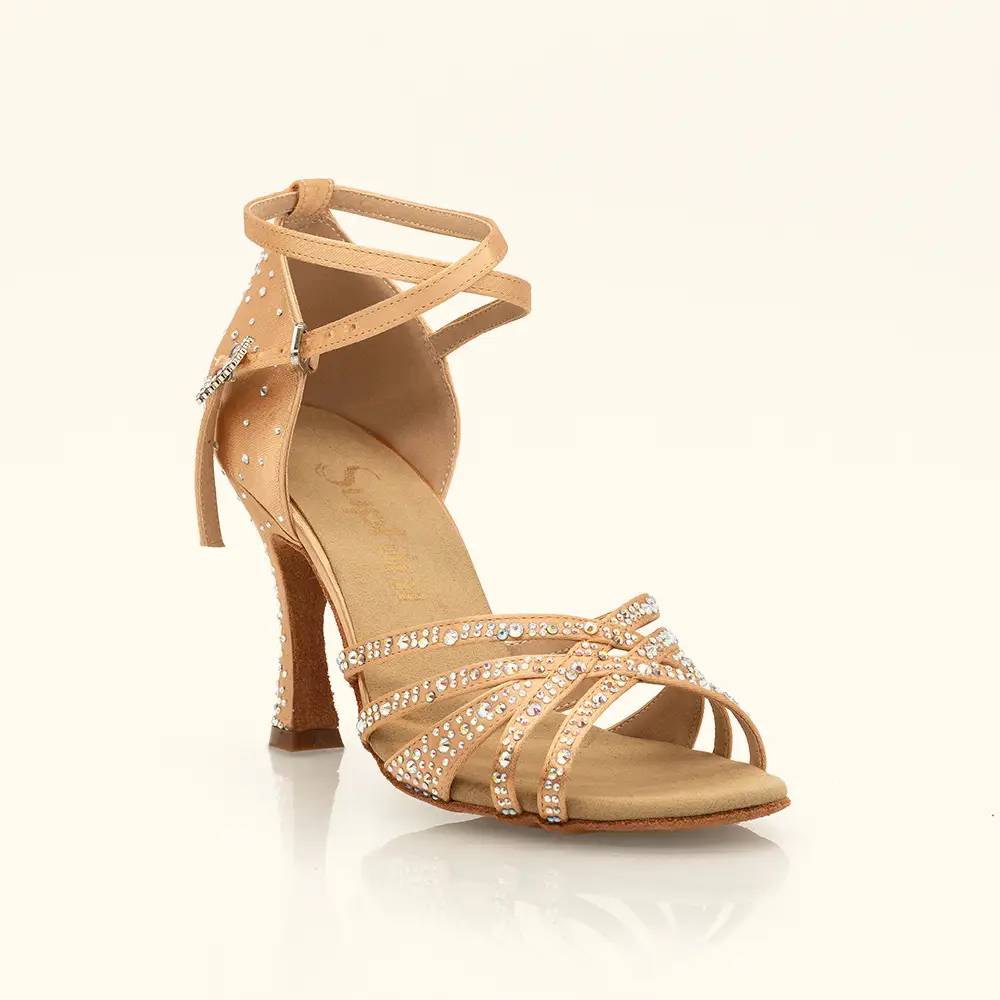
Materials Chosen by Hand, Not by Cost Sheet
Mass production selects materials primarily by price and machinability, which is why so many factory shoes use corrected-grain leather, synthetic linings, and adhesives formulated for speed of assembly. These choices look fine on a shelf but behave poorly under the stresses of dance. Suphini's makers choose leather by feel and grain, looking for hides that flex naturally and recover their shape after stretching. Linings are selected for breathability and comfort against the skin, and soles are matched to the demands of specific dance styles. Because a human being evaluates each batch rather than a purchasing algorithm, inconsistencies are caught early and unsuitable material is rejected. Dancers notice this in ways that are hard to quantify but easy to feel—the shoe simply behaves better from the very first wearing.
Construction Techniques That Machines Cannot Replicate
The structural heart of a shoe lies in how its parts are joined, and here the handmade difference becomes most tangible. Mass-produced shoes rely heavily on cemented construction, where uppers and soles are glued together in a fast, uniform process that tends to fail at the weakest bond points under repeated stress. Handmade shoes are built with layered techniques: uppers shaped over lasts, stitched seams tensioned by hand, soles attached with methods that prioritize durability and repairability. Makers adjust as they work, compensating for the natural variation in every hide and every foot. The result is a shoe whose components move together rather than pulling apart. When a machine-made shoe starts separating after a few months, a handmade counterpart is often just reaching its best condition.
Fit That Follows the Foot Instead of the Size Chart
Sizing charts assume feet come in tidy increments, but real feet are gloriously irregular—wider here, higher there, shaped by years of dancing. Mass-produced shoes force those feet into standardized molds, and dancers learn to live with hot spots, slipping heels, or pinched toes as the price of buying off the shelf. Suphini's handmade process treats fit as a conversation rather than a constraint. Measurements and individual requirements inform how the last is adjusted and how the upper is shaped, allowing room where room is needed and support where support matters. For dancers with difficult-to-fit feet, this is often the first time a shoe has felt genuinely made for them. Even dancers with average feet notice the absence of the small compromises they had quietly accepted for years.
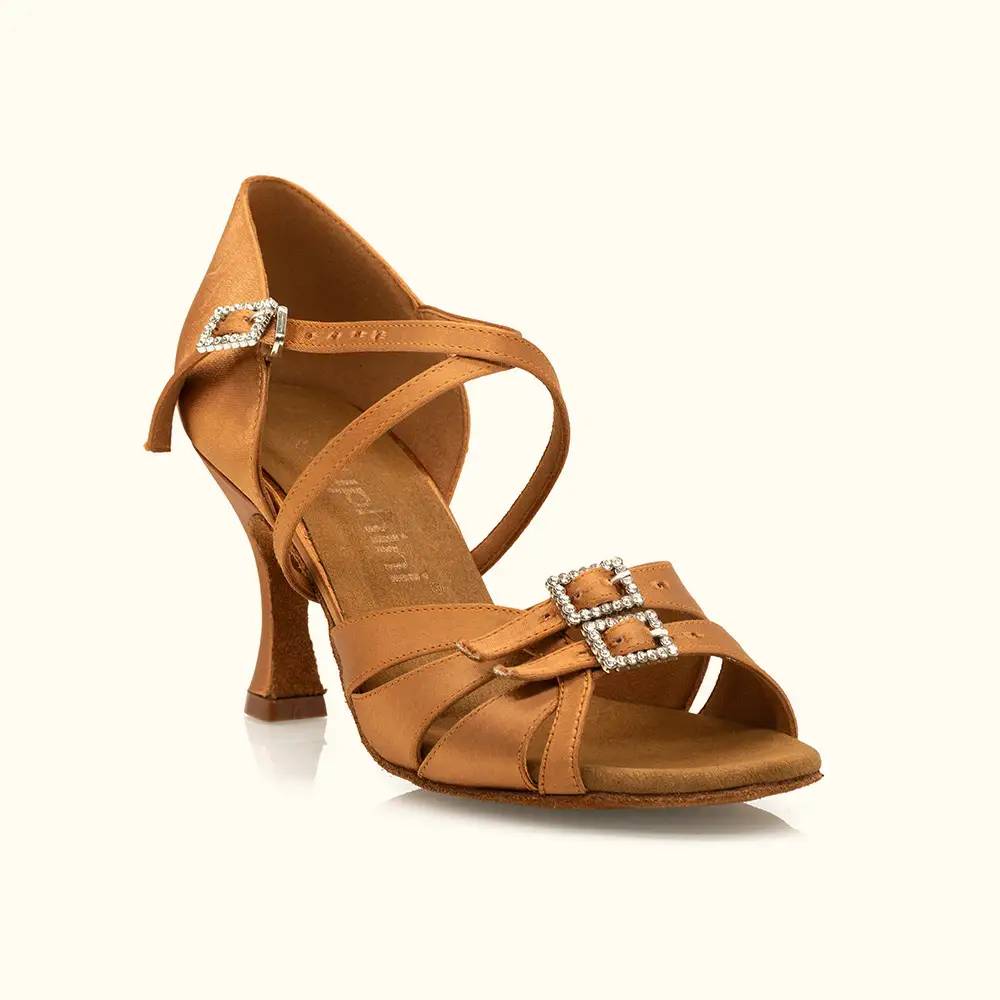
Durability, Repairability, and Long-Term Value
Price tags invite simple comparisons, but value asks harder questions about how long a shoe lasts and whether it can be kept alive. Mass-produced dance shoes are typically designed as disposable items: when the sole wears through or a seam gives way, replacement is the only option, and the cycle repeats. Handmade shoes from Suphini are built with longevity and repair in mind. Soles can be replaced, stitching reinforced, and uppers reconditioned, extending service life well beyond what factory footwear typically delivers. Many dancers find their handmade shoes feel better in the second year than the first, molding gradually to the foot. Calculated over seasons rather than weeks, the economics often favor the handmade pair despite its higher upfront cost.
The Suphini Difference, Felt on the Dance Floor
All of these distinctions—materials, construction, fit, durability—converge in a single place: the moment a dancer actually moves. A handmade Suphini shoe transmits the floor differently, pivots more cleanly, and holds the foot with a security that factory shoes rarely achieve. These are small sensations individually, but together they change how confidently a dancer can commit to a turn, a rise, or a long social evening. The difference is not marketing language; it is the accumulated result of dozens of human decisions made in service of the dancer rather than the production schedule. That is the Suphini difference, and it is why dancers who have felt it tend to measure every other shoe against it.