
In 2026, the browser is no longer a place just for reading text and viewing images; it has become a fully spatial interface. The widespread adoption of the online 3D viewer has moved beyond the "novelty" phase and is now a core operational requirement for multi-billion-dollar industries. By providing a zero-friction way to interact with complex data, web-based 3D tools are solving age-old problems of comprehension, distance, and cost.
This article explores five key sectors that have been fundamentally reshaped by the ability to view and manipulate 3D assets directly in the browser.
1. E-commerce: The Rise of "Try-Before-You-Buy."
The retail sector has seen the most dramatic shift. In the past, the "return rate" for online shopping—especially in furniture and fashion—was a major drain on profits.
- Virtual Showrooms: Customers can now rotate products in hyper-detail, checking the stitch of a leather bag or the texture of a watch dial.
- Configurators: Online 3D viewer integrated with logic engines allow shoppers to change colors, materials, and components in real-time, seeing the exact result before hitting "purchase."
- Conversion Impact: Statistics from 2025–2026 show that sites utilizing 3D viewers see up to a 40% increase in conversion rates and a 30% reduction in returns compared to those using 2D photography.
2. Healthcare: 3D Visualization for Precision Medicine
Online 3D viewers have become vital in medical education and surgical planning. Instead of static MRI or CT scans, surgeons can now use web-based viewers to:
- Patient Education: Show patients a 3D model of their own anatomy to explain a diagnosis or a surgical procedure clearly.
- Surgical Planning: Collaborative teams can annotate 3D models of organs or bone structures to plan entry points and avoid critical nerves, all within a secure browser session.
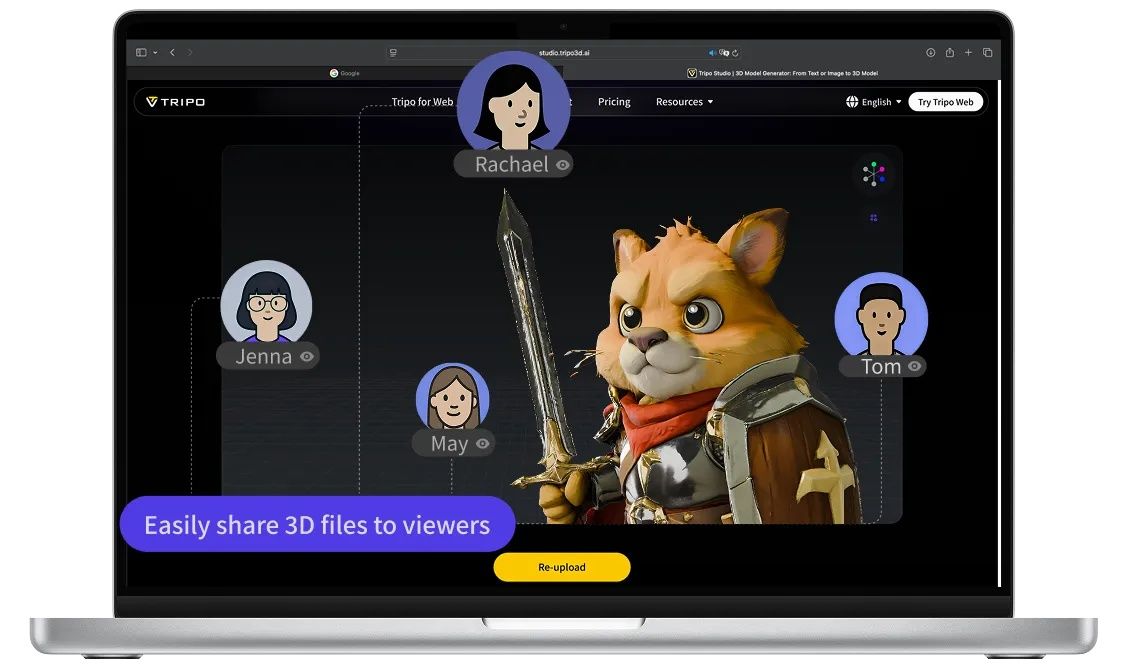
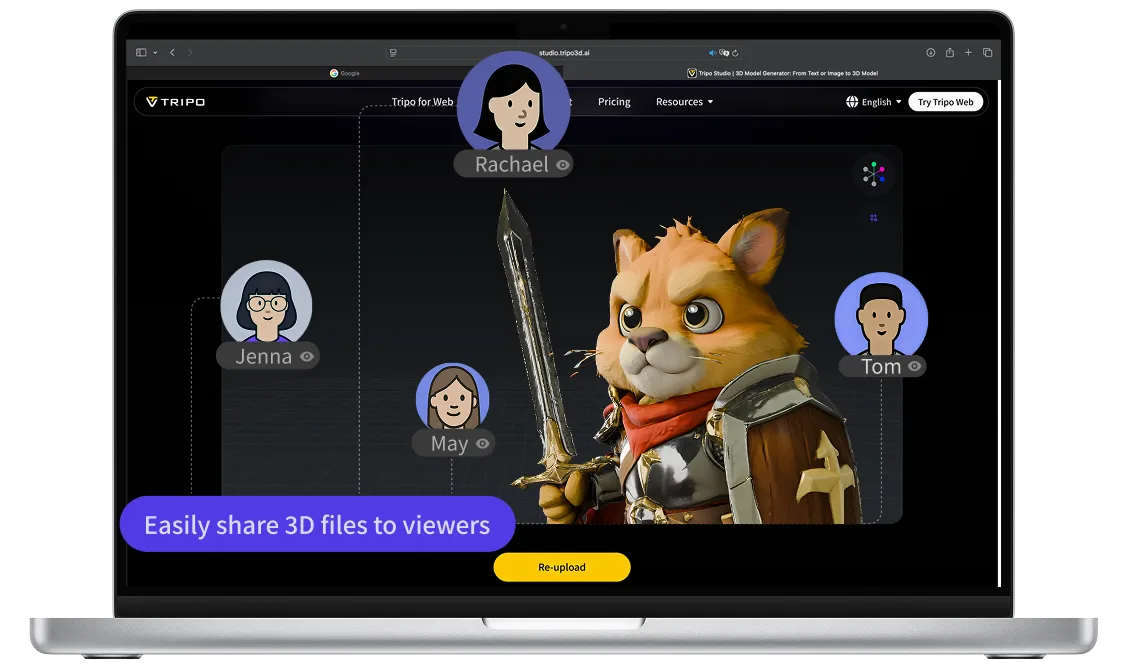
- Remote Consultations: Experts from different continents can view a patient-specific 3D model simultaneously via a shared URL to offer second opinions.
3. Real Estate and Architecture: The End of "Imagining" the Space
The real estate industry has moved from "photo galleries" to "digital twins."
- Virtual Walkthroughs: Potential buyers can "walk" through a property that hasn't even been built yet. An online 3D viewer renders the architect's vision, allowing users to check sightlines from the kitchen or the flow of the living room.
- Urban Planning: Developers use web viewers to show how a new building will fit into the existing skyline, providing stakeholders and city officials with a realistic view of the environmental impact.
- Global Access: International investors can perform a "digital inspection" of a luxury property in New York or Dubai without ever boarding a plane.
4. Manufacturing and Engineering: Rapid Prototyping and QA
For industrial sectors, the online 3D viewer is an essential part of the "Product Lifecycle Management" (PLM).
- Remote Quality Control: A parts supplier in one country can upload a 3D scan of a manufactured component, and an engineer in another can use the viewer's measurement tools to verify it meets tolerances.
- Interactive Manuals: Traditional paper manuals are being replaced by 3D views. Technicians can rotate a virtual engine to see exactly how a specific part is installed, drastically reducing errors in the field.
5. Education and Research: Immersive Learning for Everyone
From primary schools to doctoral research, 3D viewers are democratizing access to complex information.
- Virtual Labs: Students can interact with 3D models of chemical molecules, historical artifacts, or even entire ecological systems that would be too dangerous or expensive to see in person.
- Interactive History: Museums like the Smithsonian now use online 3D viewers to allow the public to "handle" ancient relics that are too fragile for physical display.
- Asynchronous Training: In vocational training, students can practice the assembly of complex machinery in a risk-free, browser-based environment before ever touching the real equipment.
Conclusion: A Seamlessly 3D World
The common thread across these industries is the removal of friction. By making 3D content accessible on any device through a simple browser link, the online 3D viewer has turned 3D data from a "specialist tool" into a "universal language." As we move through 2026, the question is no longer if a business should adopt 3D, but how quickly they can integrate it into their customer and professional journeys.