
If you have ever woken up with a stuffy nose, itchy eyes, or that vague feeling of congestion despite running your air purifier all night, you are not alone. Millions of households rely on HEPA filters to tackle indoor allergens, only to find that their symptoms never fully disappear. Here is the hard truth that filter companies do not always advertise. HEPA filters are excellent at trapping particles, but they cannot do much about living, growing, or reproducing allergens like dust mites, pet dander, and mold. These biological irritants behave differently than simple dust or smoke. They shed, they colonize surfaces, and they release chemicals that HEPA filters were never designed to neutralize. Understanding the limits of mechanical filtration is the first step toward breathing easier.
The Sneaky Biology of Dust Mites and Why Trapping Is Not Enough
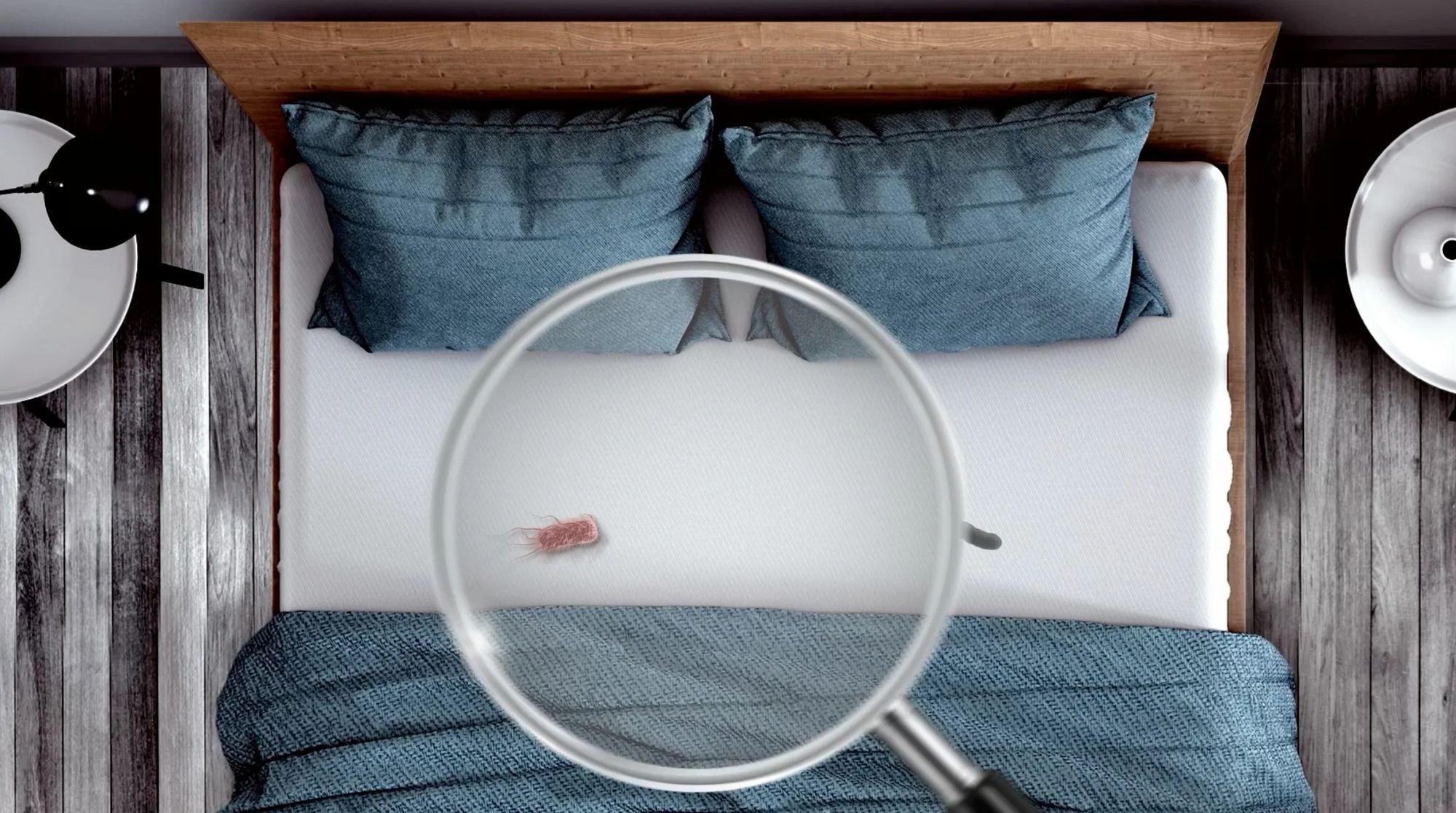
Dust mites are tiny arachnids that thrive in bedding, upholstery, and carpets, feeding on dead skin cells. A HEPA filter can certainly capture mite bodies and their fecal pellets if those particles become airborne. But here is the problem. Most mite allergens never make it into the air in the first place. They settle deep into cushions, mattresses, and rugs, where a ceiling-mounted or floor-standing filter simply cannot reach them. Even worse, mite feces contain powerful digestive enzymes that continue to trigger allergic reactions long after the particle has been trapped. I have seen homes with expensive HEPA units running twenty-four seven, yet the occupants still test positive for dust mite sensitivity. The missing piece is not better trapping but surface-level intervention. Without something that actively degrades allergens where they live, you are essentially trying to vacuum a room from across the street.
Pet Dander’s Sticky Secret That HEPA Filters Miss
Dog and cat owners often assume that running a HEPA filter will solve their dander problems. And to be fair, it helps. Dander particles are typically small enough to stay airborne for hours, so a good filter can pull a significant amount out of circulation. However, pet allergens are notoriously sticky. They cling to walls, furniture, clothing, and even human hair. Every time you sit on a couch or pet your dog, you release a fresh cloud of allergens that the filter will take time to capture. More importantly, the primary protein responsible for cat allergies, Fel d 1, is incredibly lightweight and remains airborne for a very long time. But HEPA filters only clean the air that passes through them. In a typical living room, that might be the entire volume of air once or twice per hour. Meanwhile, you are breathing that air continuously. To truly manage pet dander, you need something that neutralizes allergens on contact, not just one that waits for them to drift toward the intake vent.
Mold Spores versus Mold Growth, a Critical Difference
Mold presents an entirely different challenge because it is not just about particles. HEPA filters can capture mold spores floating in the air, and that is genuinely useful for reducing immediate exposure. But mold growth on walls, window frames, or inside HVAC systems will continuously generate new spores. A filter cannot stop that. Think of it like trying to bail water out of a boat that has a hole in the hull. You might slow the flooding, but you are not fixing the real problem. Furthermore, many molds produce volatile organic compounds as they grow, those musty smells that tell you mold is present. These VOCs are gases, not particles, meaning a HEPA filter passes right through them. You might scrub the spores from the air while still breathing in the chemical byproducts of an active mold colony hiding behind your baseboards.
What a Truly Complete Allergen Strategy Looks Like
So what does work when HEPA alone falls short? A layered approach is the answer that allergists and indoor air quality specialists keep coming back to. First, you absolutely want HEPA filtration for the particles that do become airborne. That part is not wrong, it is just incomplete. Second, you need surface treatment. Regular vacuuming with a HEPA-equipped vacuum, washing bedding in hot water weekly, and reducing indoor humidity below fifty percent are all proven methods. Third, consider active air purification technologies that go beyond mechanical filtration. Probiotic-based purifiers, for example, release beneficial microbes that compete with and break down organic allergens on surfaces. Other options include UV-C light for mold and photocatalytic oxidation for VOCs. The key is understanding that no single device can do everything, and a filter that sits passively in the corner will never remove the dander already stuck to your sofa.
Putting Together a Realistic Plan for Your Home
For most people, the takeaway is not to throw away their HEPA filter but to stop expecting it to work miracles. If you struggle with dust mite allergies, focus on encasing your mattress and pillows in allergen-proof covers and washing bedding at sixty degrees Celsius or higher. For pet dander, bathe your dog regularly, keep pets off the furniture if possible, and consider a probiotic air treatment that breaks down proteins on surfaces. For mold, attack moisture problems at their source. Fix that leaky pipe, improve bathroom ventilation, and use a dehumidifier in damp basements. Then let your HEPA filter handle whatever becomes airborne. The difference between managing allergies and suffering through them often comes down to this simple realization. Clean air starts with clean surfaces, and no filter can replace the hard work of removing allergens from where they actually live.